

NEW DELHI: In a historic and unprecedented move to secure national competitive testing channels, the Government of India has temporarily suspended access to the popular messaging platform Telegram across the country. The coordinated operation comes directly ahead of the high-stakes NEET UG 2026 Re-Examination, which is scheduled to execute on June 21, 2026. The emergency directive aims to break down underground cyber crime networks spreading falsified rumors and selling fake evaluation documents to gullible candidates.
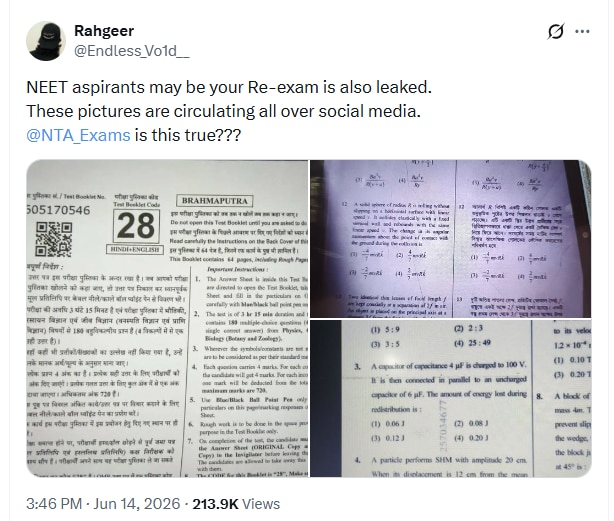
The National Testing Agency (NTA) disclosed that sophisticated cyber syndicates had systematically exploited Telegram's deep group-sharing architectures and message editing permissions to distribute false "evidence" claiming to prove paper leaks. Authorities stepped in after initial content takedown efforts failed to control the rapidly spreading misinformation networks.
The Emergency Legislative Directives Issued by MeitY
Acting in alignment with national security frameworks and exam parameters, the Ministry of Electronics and Information Technology (MeitY) issued two separate, time-bound legal mandates targeting the messaging application:
| Government Legal Order | Statutory Enforcement Provision | Active Operational Timeline |
|---|---|---|
| Nationwide Platform Blockade | Section 69A of the Information Technology Act, 2000 | Immediate effect until June 22, 2026 (Covers the re-test duration) |
| Disabling Message Editing Feature | Mandatory system feature adjustment directive | Active until June 30, 2026 (Targets post-exam data tampering) |
Deconstructing the Exploit: The Message-Editing Loophole Explained
NTA security analysts exposed how fraud rings systematically weaponized Telegram's message-editing features to manipulate public sentiment and create fake proof of leaks. The digital forgery technique involved several precise steps:
- Pre-Exam Scripting: Racket administrators would post simple, ordinary text messages on public channels days before the test, locking in an early, authentic system timestamp.
- Post-Exam Modification: Once the actual test concluded and question copies became public, administrators modified the pre-exam text, replacing it with the leaked paper or attaching newly forged PDFs.
- Timestamp Manipulation: Because Telegram retains the original creation date even after a message is modified, fraud rings used these edited posts to claim they had the leaked materials days before the exam.
- Financial Extortion: Syndicates used these fake timestamps to convince desperate families to pay anywhere from a few thousand rupees to several lakh rupees for early access to upcoming exam files.
Coordinated Police Crackdowns and Syndicate Arrests
The Indian Cyber Crime Coordination Centre (I4C) is leading a large-scale investigation alongside state police units to map out these network channels. Significant enforcement milestones include:
- Ahmedabad Cyber Crime Bust: The Cyber Crime Branch dismantled an inter-state network running eight separate illicit channels, discovering over 1.5 crore rupees processed through fraudulent bank profiles.
- Bihar Economic Offences Unit Directive: The Bihar EOU issued a formal advisory on June 9, warning the student community against online financial scams offering early question sheet access.
- Mass Content Takedown: Security agencies have deactivated thousands of illicit groups, automated bots, and scam threads with names like "Private Mafia" and "PAPER LEAKED NEET".
- NEET UG Re-Exam Date: June 21, 2026
- Official Server Stability: Stable (Over 10 Lakh Downloads)
- Grievance System Hub: Active via official NTA portal
- Security Infrastructure: Fully Secured and Monitored
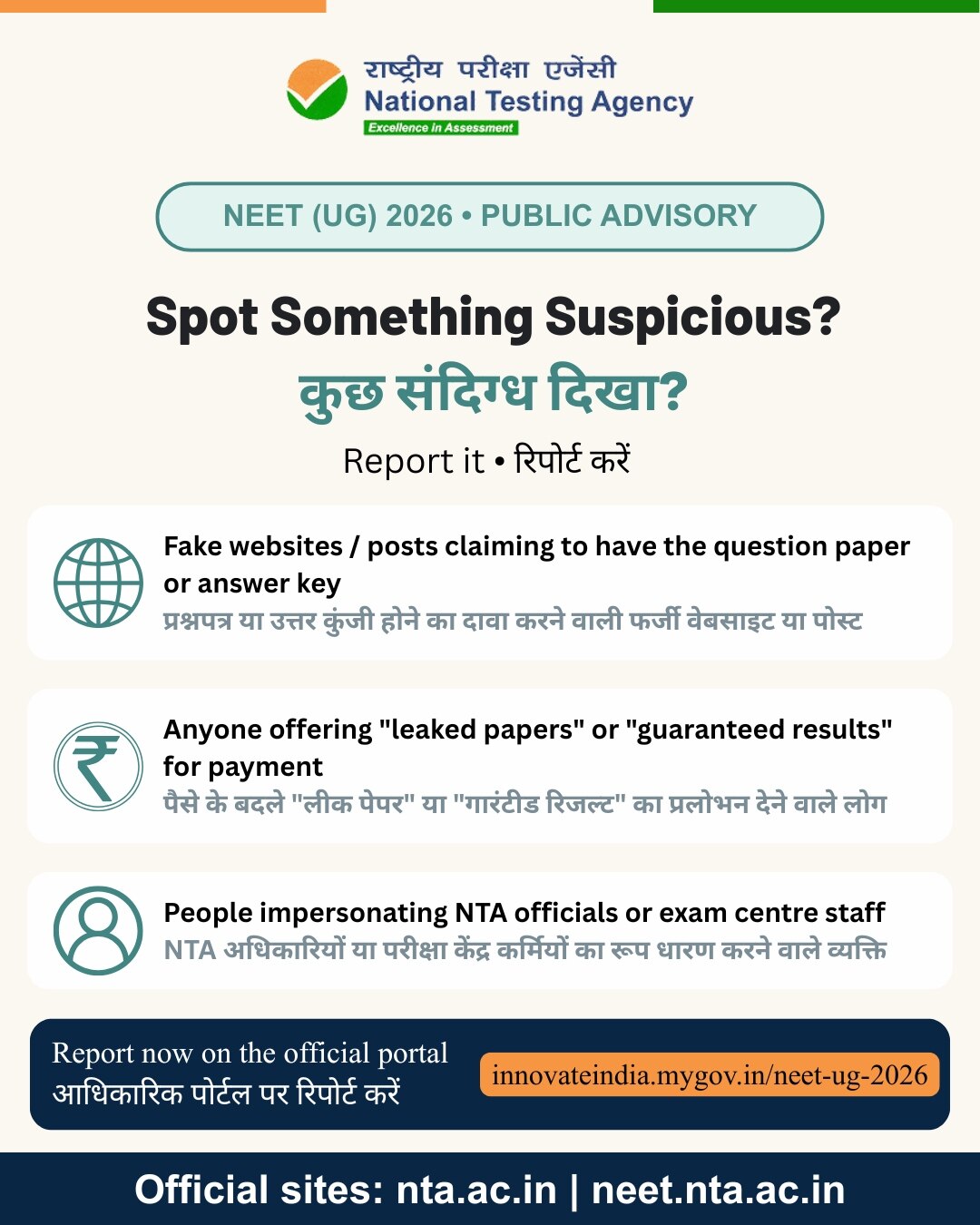
- Verification Directive: Trust ONLY official updates on nta.ac.in
- Suspicious URL Check: Scan unfamiliar domains via trusted diagnostic engines
- Reporting Channels: Flag fake official profiles to cyber crime units immediately
NTA officials expressed regret for the temporary disruption caused to students using Telegram for legitimate study purposes, emphasizing that blocking the platform was a necessary step to protect the integrity of the national examination process.