

NEW DELHI: Coordinated information assessments have brought fresh scrutiny to the status of bilateral diplomacy and water treaty dynamics in South Asia. Despite persistent speculation regarding secret dialogues in neutral regional capitals, official security advisors emphasize that the government's formal policy boundaries remain completely untouched by informal interactions, which lack state endorsement or official back-channel mandates.
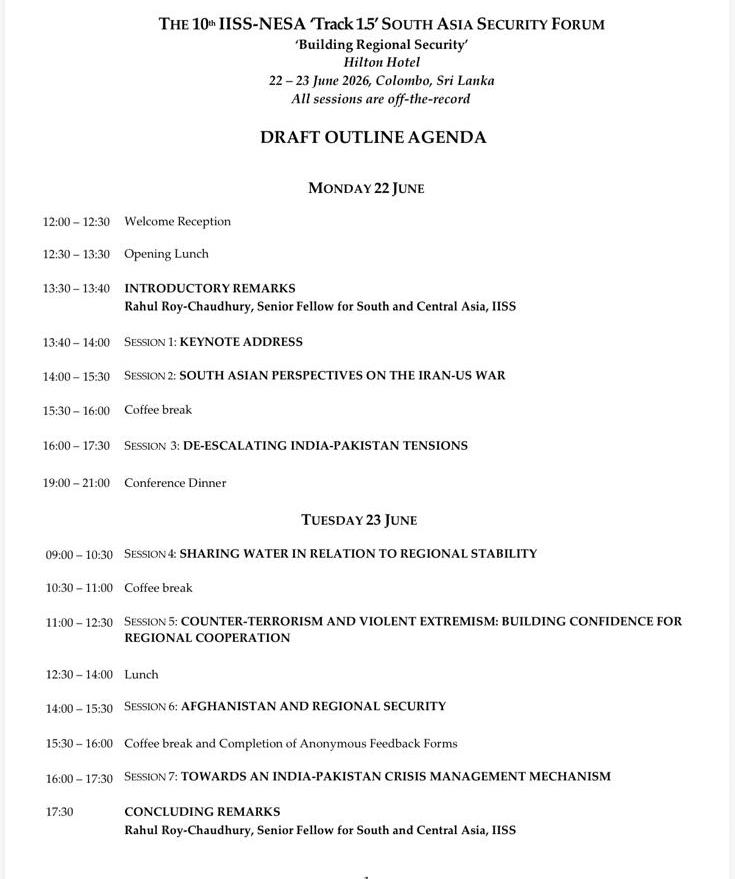
Recent international panels held in Colombo and Bangkok, which featured retired diplomatic and intelligence figures, have been characterized by experts as narrative campaigns rather than verified track-channel communications. New Delhi continues to maintain a rigid red line: formal diplomatic engagement is directly contingent on the total abandonment of cross-border militancy as an instrument of state policy.
- Official Back Channels: None Active / Suspended
- Bilateral Dialogue Rule: "Talks and Terror Cannot Co-exist"
- Water Treaty Doctrine: "Terror and Water Do Not Flow Together"
- Indus Waters Treaty Status: Maintained under strict technical abeyance
- Colombo Forum Profile: Attended exclusively by retired officers in private capacities
- Bangkok Meeting Base: Privately funded seminar with no state representation
- Indian Representation: No serving government or military personnel
- Pakistani Contingent: Included former intelligence and active political actors
The Indus Waters Treaty: Strategic Flashpoint & Doctrinal Shifts
The 1960 Indus Waters Treaty (IWT), originally brokered under World Bank auspices, has shifted from a technical resource sharing accord into a core strategic flashpoint. Following major cross-border security breaches, such as the Pahalgam attack, India placed aspects of the treaty implementation framework into formal abeyance. This has triggered intense narrative counter-campaigns attempting to frame the defensive legal measure as a resource weaponization maneuver.
Security observers note that the dispute has taken on a new dimension, with arguments surfacing that question the status of critical civilian infrastructure. Factions are attempting to link water rights directly to long-standing territorial and regional sovereignty questions, transforming a traditional resource agreement into a venue for geopolitical friction.
Historical Allocations & Resource Asymmetry
Analyses of the 1960 treaty underscore deep historical and structural asymmetries built into the original agreement signed during early post-independence administrations. The foundational parameters of the treaty reveal a lopsided resource distribution model:
- Water Distribution Disparity: Approximately 80% of the total water volume from the Indus system was allocated downstream, leaving India with a restricted 20% share restricted primarily to the Eastern rivers.
- Financial Contributions: Historical records show India provided substantial monetary compensation—totaling roughly 52 million pounds at the time—to fund downstream dam construction across border coordinates.
Bilateral Capabilities and Internal Security Constraints
Despite aggressive public rhetoric regarding potential conflict escalations or threats directed at infrastructure assets like upstream dams, defense assessments demonstrate that a full-scale conventional military escalation remains highly improbable. Internal security indicators point to severe internal and cross-border operational distractions that limit aggressive maneuvers:
- Western Frontier Volatility: The frontier along the Durand Line remains highly unstable, with constant cross-border friction absorbing considerable security resources.
- Internal Insurgencies: Protracted local insurgencies, particularly across specialized economic zones like Balochistan, continue to create severe disruptions and challenge infrastructure projects.
- Domestic Discontent: Widespread public and economic unrest in provinces like Sindh, alongside active domestic militant networks in regions like Khyber Pakhtunkhwa, severely limits external projection capabilities.
Ultimately, geopolitical experts emphasize that rhetoric cannot override hard economic and tactical realities. The path toward regional stabilization does not lie in internationalizing technical treaties, but in addressing the foundational issue: achieving a verifiable cessation of cross-border militancy and replacing aggressive posturing with responsible statecraft.
Frequently Asked Questions (FAQ)
No. Official diplomatic records confirm that no authorized back channels are currently operational. Recent meetings in Colombo and Bangkok were informal forums attended by retired officers participating strictly in their personal capacities.
India maintains a strict policy red line: formal state-level talks and cross-border terrorism cannot go together. Normalization requires a complete and verifiable halt to state-sponsored militancy.